
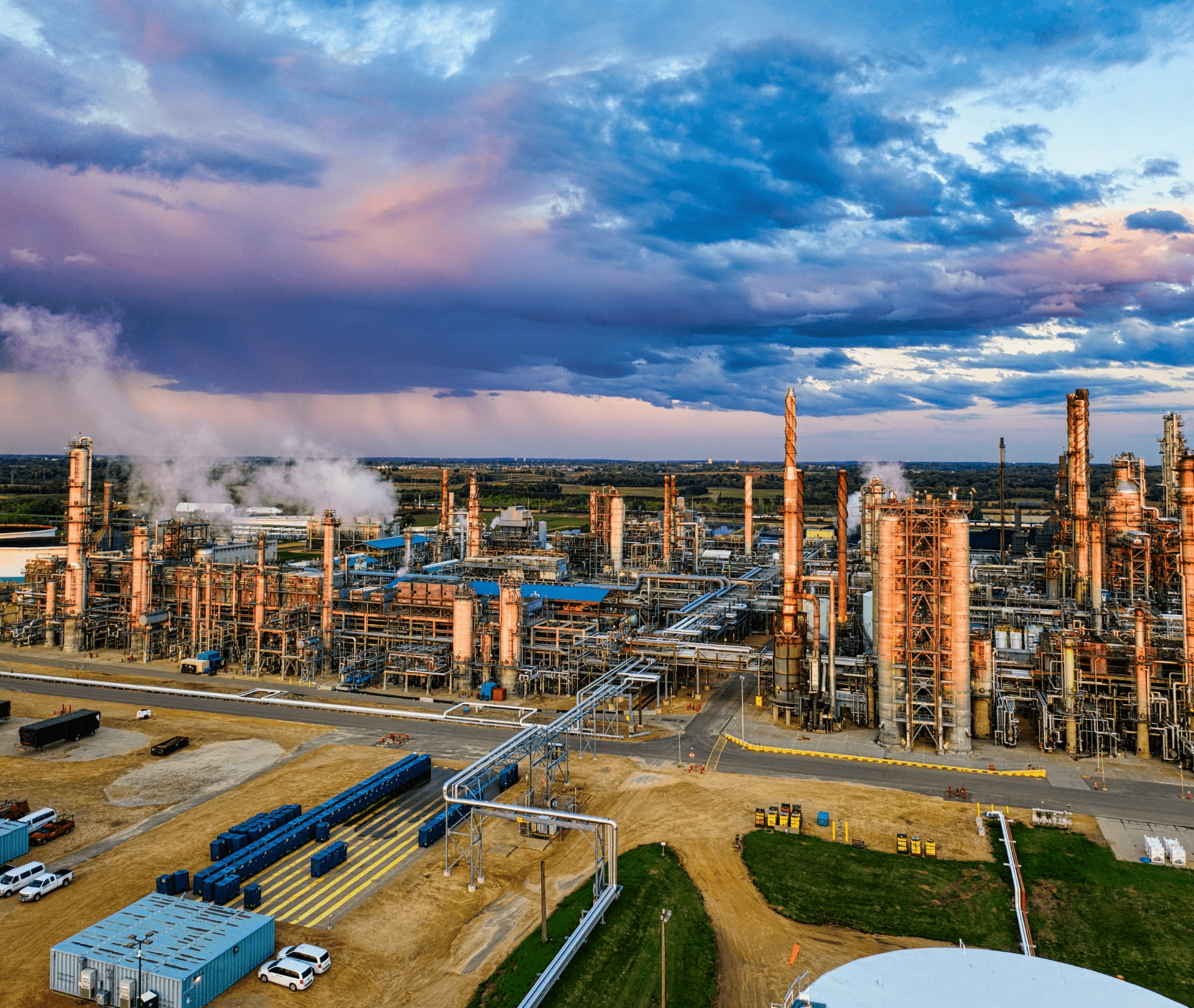
Diesel fuel serves as the foundational energy backbone of modern society, powering the heavy-duty transport, agriculture, construction, and emergency backup systems that keep global supply chains and infrastructure functioning
What is Diesel Fuel?
Diesel fuel is a specific type of liquid fuel refined from crude oil or biomass, designed to power compression-ignition engines.
Why do we use it?
Most of the products we use are transported by trucks and trains with diesel engines, and most construction, farming, and military vehicles and equipment also have diesel engines. As a transportation fuel, diesel fuel offers a wide range of performance, efficiency, and safety features. Diesel fuel also has a greater energy density than other liquid fuels, so it provides more useful energy per unit of volume.
In 2025, distillate (or diesel) fuel consumption (excluding biodiesel and renewable diesel) by the U.S. transportation sector was about 2.94 million barrels per day, or about 123 million gallons per day. This annual consumption accounted for about 75% of total U.S. distillate consumption and about 14% of total U.S. petroleum consumption. On an energy content basis, diesel fuel accounted for about 22% of total energy consumption in the U.S. transportation sector and for about 6% of U.S. total primary energy consumption. (ref. US Energy Information Administration)
How is Diesel fuel refined today?
Diesel fuel is refined today by heating crude oil in a fractional distillation tower, then cleaning and cracking the middle-distillate vapors into ultra-low sulfur diesel (ULSD).
• Preparation and Distillation: Crude oil is heated and piped into a large atmospheric distillation tower. The liquid vaporizes and separates by boiling point. The diesel fraction (gas oil) condenses in the middle range, typically between 200°C and 350°C (392°F to 662°F). (ref. US Energy Information Administration)
The key steps to refining diesel are:
• Cracking Heavy Fractions
• Hydrotreating (Desulfurization) and
• Blending and Additives